
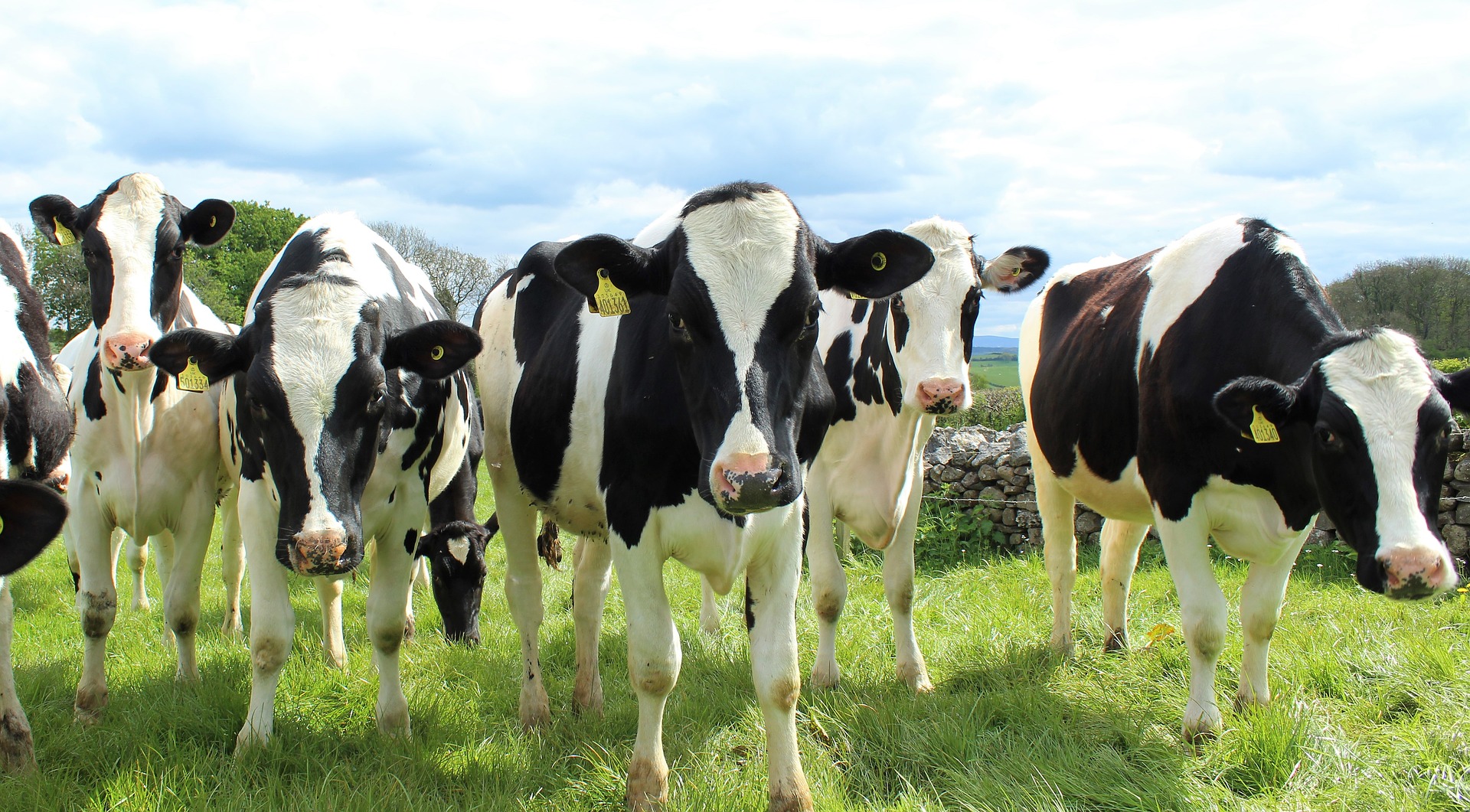
Dairy food and diet choices
Dairy products are a nutrient dense food, providing an excellent source of energy, protein, and a wide range of vitamins and minerals. When it comes to efficiency of producing these components, dairy ranks highly in terms of nutrients per unit of carbon and cost terms. The dairy sector can provide affordable, high-quality food products, as part of a well-balanced, sustainable diet to a growing world population.


Addressing dairy sector emissions
The UK dairy industry has made significant progress in understanding its environmental impact, setting future goals and developing plans to reach these. The Dairy Roadmap 2018 (first published in 2008 and due to be updated in 2022) was developed to monitor, improve and report on the environmental impact of producing dairy products in the UK. This includes reducing the use of fossil fuels in milk transport.
The Roadmap includes regular progress reports, with ambitious sector targets for delivering environmental improvements. This cross-industry initiative, along with actions of farmers and processors, has helped make the UK a world leader in sustainable dairy production.

© Photo Autoyhtymä Roimola Ky - Finland’s first Valio pilot milk collection truck running on liquefied biogas.
- Arla is developing an on-site biogas plant at their Lockerbie site and are looking at emissions reduction across their sites
- First Milk have invested in a biogas plant on their main cheese creamery that is putting biomethane into the gas grid and its boilers
- Grahams are exploring an investment in AD and have started investing in the use of biomethane for milk collection trucks
Future dairy processor Initiatives must include a range of activities to support their farmer suppliers or members and these need to gather momentum in the next few years.
Carbon reduction at farm level
Arla UK’s recent Climate Check Report focuses on the carbon footprint of the majority of their UK farmer members. It demonstrates their performance against global targets and highlights the areas that are the largest sources of on-farm emissions for their members.
This provides information about where and
how activity should be focused to give the best sustainability improvements. Arla’s robust, externally validated carbon footprint data will be part of an on-going monitoring process on its members’ farms.
First Milk’s pledge ‘First4Milk’ (announced 30 Mar 20) sets bold targets for achieving net zero, plus ambitious sequestration targets. First Milk is using novel carbon measuring techniques to monitor the carbon capture potential of their farmers to develop new capture opportunities.
Muller, Lactalis and Saputo will all shortly be launching programmes to capture carbon data on farm and drive change to grow their sustainability credentials.
Milk processors are taking action to address their environmental impact. On-farm emissions account for the vast majority of their Scope 3 emissions, so particular emphasis needs to be put on the ability of individual farmers to meet reduction targets at a farm level.
There are generally perceived to be four main ways to drive sustainability on dairy farms:
-
Implementing farm practices that reduce losses to the environment.
-
Benchmarking and sharing knowledge on carbon saving between farms.
-
Improving the efficiency of farming and livestock management systems.
-
Adopting new technologies that can replace fossil fuels and reduce emissions.

The changes that are needed in the dairy industry will be driven by those farmers that have the mindset and desire to harness new technologies and innovations. Those who can adapt and change need to know the commercial benefits to ensure they can capitalise on the opportunities.
This must go beyond the replacement of production, as other farmers find the demands of sustainability change too much and perhaps move out of milk production.
Specific options that need to be actively pursued by UK dairy farmers, with support from their processor partners to develop more sustainable production include the following:
-
Driving ‘Yield per Rumen’
-
Health and welfare
-
Enhanced breeding
-
Managing nitrogen on farm
-
Novel technologies
These are discussed in more detail below.
Driving ‘yield per rumen’
A more efficient cow that can produce milk with fewer inputs is a more sustainable cow. The industry needs to work together to develop continuous marginal improvements.
Farmers face increasing focus on the damaging environmental impact of methane and nitrous oxide on climate change. Hence, there is a need to make each cow, or each rumen, as efficient as possible to drive output at the lowest emissions level or environmental cost.
A dairy cow that has increased its annual milk yield by 500 litres to 7,000 litres through a mix of better breeding, high quality forage and better health management, will have broadly the same environmental impact as the same cow producing 6,500 litres. With a range of yields, this is not a system/breed specific argument and farmers needs to see what can be done to push yield without damaging cow welfare.
Health and welfare
Overall, there is a direct correlation between the farms with the healthiest cows and those with a lower carbon footprint per kg of milk16. Putting animal welfare front and centre of dairy farming is good for the cow and good for the environment.

Enhanced breeding
The benefit of genetic gain for the dairy cow is not new to UK farmers, but science in this area has developed hugely in recent years with the introduction of genomics and sexed semen and is now being harnessed to drive environmental improvements on-farm.
Two new genetic indexes to help farmers breed more environmentally friendly cows were launched in August 2021. One of these, EnviroCow, reflects the important role genetics and breeding play in improving the environmental efficiency of milk production.
Incorporating cow lifespan, milk production, fertility and the new Feed Advantage index, EnviroCow is one of the first genetic indexes in the world to focus solely on breeding cows for their environmental credentials.
In addition, there is a new technology being pioneered by ST Genetics, owners of Cogent in the UK. This has identified and mapped the genes responsible for increasing Feed Conversion Efficiency (F.C.E) which, if adopted, could transform the reduction of dairy’s carbon footprint.
Integrated, farm-wide breeding strategies, including genomic testing to help develop key sustainability traits (production, health, longevity, feed conversion efficiency) are being developed. Advances in semen sexing technology have seen significant improvements in conception rates, leading to faster generational intervals and better dairy-beef integration. Selection for high milk solids has also helped to improve feed conversion efficiency.
 Rumen methane production can be also manipulated by genetic selection, helping to reduce the dairy sector’s emissions footprint. Imagine the possibilities if British dairy farmers can breed dairy cows which emit fewer greenhouse gases?
Increased genomic testing has enabled the identification of a herd’s most efficient and therefore most sustainable cows to breed from. Farmers can now identify cows that produce higher levels of milk solids with the same level of input, enabling them to produce the same or more milk solids with fewer cows.
Managing nitrogen on farm
Better management and use of nitrogen will help reduce GHG emissions from dairy farms and farmers are learning how to do this. Assessing a farm’s nitrogen balance by measuring the nitrogen introduced onto the farm through feeds, fertiliser, stock, manures, etc, compared to the nitrogen leaving the farm through milk and outputs is crucial. The difference between the two figures effectively represents the nitrogen unaccounted for, or most likely, lost to the environment, either to air or into the ground/water.
This nitrogen balance is a measure of the efficiency of nutrient and input use on the individual farm, and it is necessary to reduce reliance on manufactured nitrogen fertiliser. This is a major driver of emissions. Improved management
of slurry and manures will reduce ammonia/ nitrogen losses, as will improved technologies for spreading, such as injection. Moving away from reliance on fossil-based fertilisers to feed grass pastures to inclusion of a higher proportion of nitrogen-fixing legumes will reduce reliance on synthetic nitrogen without reducing feed quality (in many cases, feed quality can be improved).
Dairy farmers are also changing how they manage the soil, looking at cropping profiles and better slurry management to help them reduce losses. Covering of slurry storage, on-site digestion of manures and residues, plus low emission spreading techniques with targeted application will all have an impact. In addition, reducing the protein levels in cow rations will also avoid wasting nitrogen.

The rising cost of fossil fuel-based fertilisers places a greater premium on the nutrients available from manure, which can be enhanced by using AD to extract energy before digestate is land applied. The 2016 DC-Agri work carried out by the Waste and Resources Action Programme helped to inform the guidance in the RB209 section on organic materials so that optimal use can be made of digestate land application.
Novel technologies
The industry is trialling and adopting a range of practices, products and procedures that can help reduce the industry’s environmental footprint. These technologies can reduce waste and emissions from dairy farming activity and increase efficiencies at a farm and milk processing level.
Precision dairy farming technology needs to be well- implemented to ensure that farmers are able to access data to help manage their herd. Interpretation of the data is key, and it can be challenging to identify the best management changes suited to individual herds.
Precision systems include intelligent collars, ruminant bolus devices and in-parlour systems that improve monitoring of herd performance (inc. individual cows or family lines).
Potential technology developments include:
-
Methane-reducing additives in feed
-
More targeted application of slurries and bought-in fertilisers
-
Remote monitoring of cattle lameness
-
Acidification of slurry to minimise ammonia emissions
-
Replacement of diesel with biofuels (including biomethane produced on farm)
-
Possible supply of biogas (or biomethane) from farms to their milk processors
-
On farm processing of milk for local sale – thereby reducing transport emissions
-
Increased use of robotics (already well established for milking on some farms) and autonomous vehicles to reduce feed wastage and manage slurry.
Nevertheless, if dairy farmers can respond, the sector should be able to benefit from decarbonisation. With an efficient supply chain and a milk supply based to a large extent on forage crops, it should be able to supply quality products to UK and European and global markets.
Extract taken from the RASE Farm of the Future: Journey to Net Zero Report Sector Journey specialist paper: Decarbonising UK Dairy Production Written by John Allen, Kite Consulting.